 Denver Storm Roofing
 Hail Damage Roof Repair in Denver, CO
Last updated: September 2026
Price ranges are compiled from national cost data and published local pricing, September 2026 — methodology on the cost page.
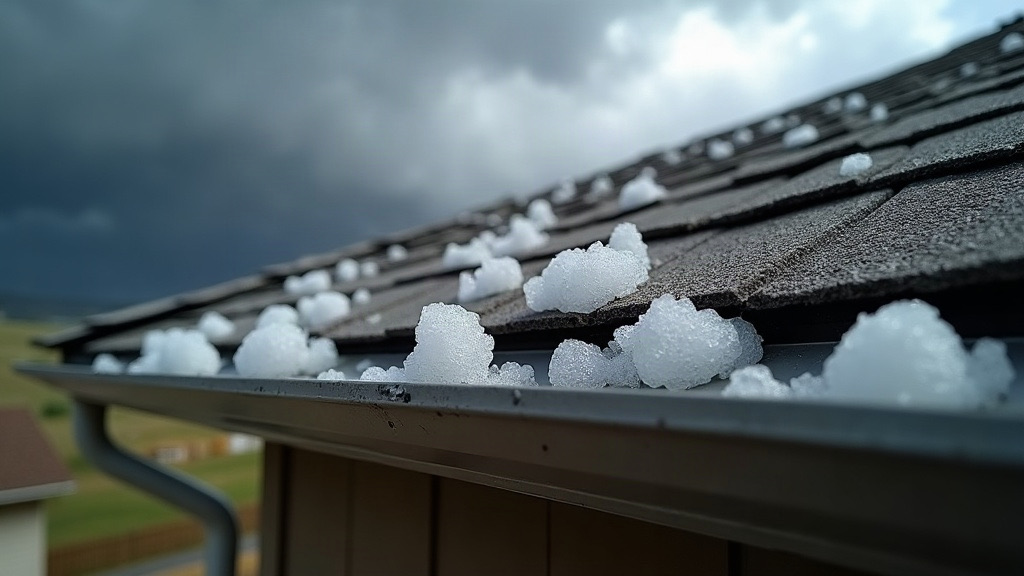
Hail Alley: Why Denver Roofs Take a Beating
The Front Range corridor — Denver, Aurora, Lakewood and the suburbs stretching toward Colorado Springs — experiences some of the highest hail frequencies in the country. The metro's season concentrates in May through August, when afternoon supercells ride the Palmer Divide and drop hail from pea-size to softball-size, sometimes on the same street grid two years apart. Whole Denver neighborhoods have been re-roofed twice in a decade.
The compounding local factor is altitude. A mile closer to the sun, Denver's UV exposure degrades asphalt shingles faster than national averages assume, and freeze-thaw cycling works every micro-crack from October through April. A roof already weakened by UV and thermal stress takes hail worse — which is why Denver roofs underperform their rated lifespans so consistently.
What Hail Actually Does to a Shingle
A hailstone impact does three things: it knocks granules loose (the protective top layer), it bruises the asphalt mat underneath — a soft spot like a bruised apple — and on harder hits it fractures the fiberglass reinforcement. None of these necessarily leak today. The bruise cracks open over months of thermal cycling, and the leak arrives a season or two later, when the storm is no longer the obvious suspect.
That delay is the trap. It is also why "my roof looks fine from the ground" settles nothing — bruising is found by hand, on the roof, by someone who knows what a functional hail hit feels like versus ordinary wear. Adjusters and legitimate roofers both look for the corroborating evidence first: dented vents, flashing, gutter faces and downspouts, which date the event to the storm.
Documenting Hail Damage for an Insurance Claim
Good documentation is the difference between a smooth claim and a disputed one. The sequence: photograph the collateral evidence (dented gutters, downspouts, vents, window screens, siding, AC fins, vehicles) with timestamps; note the storm date — your insurer will match it against weather data; get a written inspection report with photos from an established local roofer; then file promptly.
When the adjuster visits, the roofer's report and marked test squares give the inspection a starting point. If the initial estimate misses code-required items — ice-and-water shield, drip edge, ventilation corrections — your contractor documents them in a supplement. Full step-by-step on our storm damage page; we deliberately don't target specific insurance brands — the process is the same across carriers.
Repair, Replace, or Upgrade to Class 4
Repair fits isolated damage on a younger roof: a slope or two with scattered hits, a cracked pipe boot, damaged flashing — typically $500–$3,000. Replacement fits widespread mat fracturing, an aging roof, or an adjuster's total-loss finding — usually covered minus deductible.
If you're replacing anyway, this is the moment for the Class 4 impact-resistant upgrade: shingles tested against steel-ball impacts simulating large hail. The upgrade typically adds 10–20% to material cost, and many insurers offer premium discounts for Class 4 roofs — in hail alley, the math is unusually favorable. For the durable extreme, metal roofing sheds both hail and snow; our replacement page covers the full material decision.
Choosing a Hail Damage Roofer Without Getting Burned
Hail season is storm-chaser season. After a damaging cell, out-of-state crews work the affected ZIP codes within 48 hours — free inspection, urgent damage claims, sign tonight. The filter that removes the entire category: a verifiable Denver-area office, a Denver municipal contractor license you can check, and no paperwork beyond an inspection report on the first visit.
Every company on our top-picks comparison has a verified local presence, and several specialize in exactly this work — hail inspection, claim documentation, and replacement. Full profiles and published phone numbers are on the companies page.
Frequently Asked Questions
What size hail damages a roof?
Quarter-size (1 inch) hail is the standard threshold for potential shingle damage, but velocity, density and roof age matter as much as diameter — a UV-weakened Denver roof takes damage from smaller stones than a new roof does. After any storm with quarter-size hail or larger, an inspection is warranted.
Can hail damage be repaired, or does the whole roof get replaced?
Both happen. Isolated hits on a younger roof are legitimately repairable ($500–$3,000 typical). Widespread bruising or mat fracturing across slopes means replacement — which, with an approved claim, costs you your deductible rather than the full price.
How much does hail damage roof repair cost in Denver?
Repairs run $500–$3,000 for isolated damage; full replacement runs $9,000–$15,000 for asphalt before insurance. With an approved hail claim, out-of-pocket is typically just your deductible. Ranges compiled from national cost data and published local pricing.
Will my rates go up if I file a hail claim?
Hail is an "act of God" event, and Colorado insurers generally do not surcharge individual policies for weather claims — though storm-exposed ZIP codes see area-wide rate adjustments regardless of whether you personally file. The bigger financial risk is not filing: unclaimed hail damage that leaks later is out of pocket.
How long after a hailstorm can damage appear?
The bruising happens on impact; the leaks arrive later — typically after months of freeze-thaw cycling crack the bruised mat open. This is why documentation timing matters: you want the damage on record while it's clearly attributable to the storm.
Talk to a Denver Roofing Specialist
Hail damage, an active leak, or a roof that's simply old — one call connects you with Denver roofing help, free and with no obligation. Storm just hit? Read the storm damage checklist first.
24/7 — speak with a local specialist now