 Denver Storm Roofing
 Storm Damage Roof Repair in Denver, CO
Last updated: September 2026
Price ranges are compiled from national cost data and published local pricing, September 2026 — methodology on the cost page.
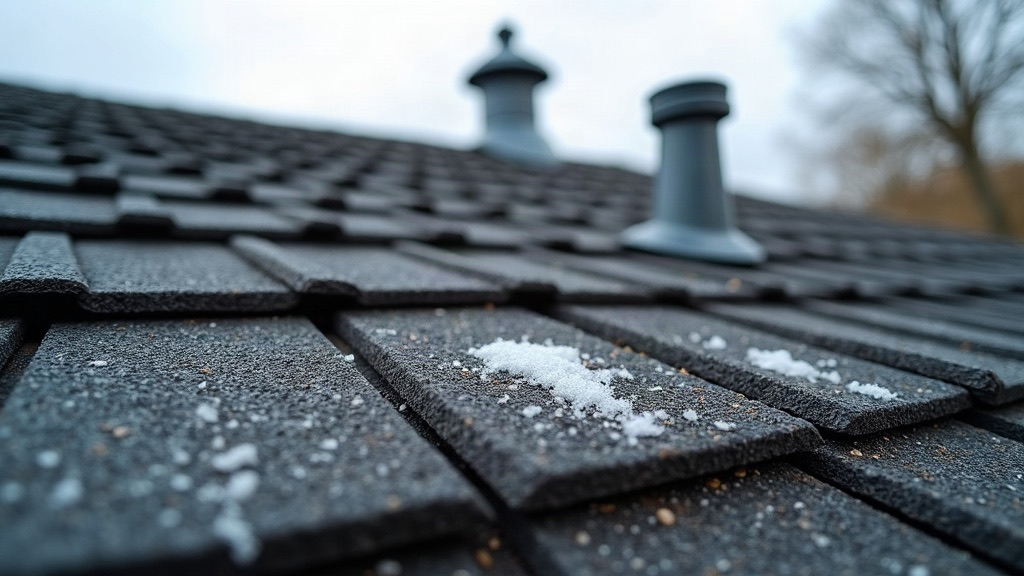
What Storm Damage Looks Like on a Denver Roof
The Front Range delivers two distinct damage modes. Hail bruises shingles — knocking granules loose and fracturing the fiberglass mat underneath — and dents soft metals: vents, flashing, gutters, downspouts. Those soft-metal dents are the tell an adjuster looks for; they prove the storm even where shingles hide their bruises. Wind lifts and creases shingle tabs, breaks seals, and can strip whole sections on older roofs. The Denver metro's peak season runs May through August, and severe cells are a yearly expectation, not a rarity.
What you can see from the ground: granules collecting in gutters and at downspout exits, dented gutter faces, shredded or missing shingle tabs, and debris impact marks on siding and window screens. What you cannot see from the ground is most of it — hail bruising is an on-roof finding, which is why the post-storm inspection is the industry's default first step and why legitimate companies offer it free.
The First 24 Hours: A Checklist
- Photograph everything before anyone touches anything — roof (from the ground is fine), gutters, downspouts, siding, window screens, vehicles. Timestamped phone photos are exactly what a claim starts with.
- Check inside. Attic first: daylight through decking, wet insulation, fresh water stains. Then ceilings and upper-floor walls.
- If water is actively entering, tarp it. Emergency tarping is standard scope for local roofers — $300–$800, and typically reimbursable as claim mitigation. Numbers are on our emergency roof repair page.
- Call your insurer to open a claim. You can do this before or after the roofer's inspection — but before authorizing any permanent repair.
- Get a free inspection from an established local company. A written, photo-documented inspection report is what you bring to the adjuster conversation.
- Do not sign anything with door-knockers. No contract, no "contingency agreement," no assignment of benefits on a first visit. Ever.
How the Insurance Claim Actually Works
The sequence is consistent across insurers: you file, an adjuster inspects, the insurer issues an estimate (usually on Xactimate pricing), and you hire a contractor to perform the work for that amount — minus your deductible. If the contractor finds legitimately missed items (code-required ice-and-water shield, drip edge, decking damage), they file a supplement with documentation. This is normal practice, not adversarial.
Two Denver-specific rules to know. First, Colorado SB 38 makes it illegal for a roofer to waive, rebate or absorb your deductible — a contractor offering to "eat the deductible" is proposing insurance fraud as a business model. Second, claim windows are finite (typically a year from the date of loss, policy-dependent): hail damage discovered "later" can age out of coverage, which is why post-storm inspections matter even when nothing is leaking.
Repair vs Replacement After a Storm
Isolated damage — a few wind-lifted tabs, one damaged pipe boot, a single slope with light bruising — is a repair: typically $500–$3,000, and often below the deductible threshold where a claim makes sense. Widespread mat fracturing across multiple slopes is a replacement, and that is exactly what hail insurance exists for.
The honest decision inputs: the roof's age (a 15-year-old roof with fresh hail damage is a replacement conversation; a 4-year-old roof with isolated damage is a repair), the damage distribution, and what the adjuster's finding actually says. Any contractor who declares "total loss" from the driveway is selling. Our roof replacement page covers the full replacement decision; roof repair covers the smaller jobs.
Storm-Chasers: Denver's Second Storm
Every significant Front Range hailstorm triggers a predictable second event: an influx of out-of-state roofing crews working the affected neighborhoods door to door. The pattern is consistent — free inspection offered on the spot, dramatic damage claims, a contract pushed for immediate signature, sometimes a request to sign over the insurance claim itself. Work is subcontracted to whoever is available, and the company is unreachable by the time warranty issues surface.
The defense is three questions that take two minutes: Where is your Denver-area office? (Verify the address exists.) What is your Denver contractor license number? (Verify it with Community Planning & Development.) Who will actually perform the work? Every company on our top-picks comparison and the companies directory has a verifiable local presence — that filter alone eliminates the entire storm-chaser category.
Who Does Storm Damage Repair in Denver
Storm and hail work is the core competency of this market: Metro City Roofing builds its whole residential practice around hail insurance claims; Interstate Roofing, Horn Brothers, Cenco Roofing and Excel Roofing all list storm damage inspection and repair; New Roof Plus and Roper Roofing & Solar advertise 24/7 emergency response. Profiles, published phone numbers and our screening notes are on the comparison page and companies directory.
Whatever company you choose, the protections are the same: written scope, named materials, Denver permit pulled, deductible never "waived," and payment on progress — not on promises. Price expectations for every scenario are on our Denver roofing cost page.
Frequently Asked Questions
How do I know if my roof has storm damage?
From the ground: granules in gutters, dented soft metals (vents, flashing, gutter faces), creased or missing shingle tabs, and impact marks on siding or screens. Hail bruising of shingles themselves is an on-roof finding — schedule a free inspection after any storm with quarter-size hail or larger.
Should I call my insurance company or a roofer first after a storm?
Either order works, but do both before authorizing permanent repairs. A roofer's free inspection gives you a documented damage report; the insurer's adjuster makes the coverage decision. Emergency tarping to stop active leaks should happen immediately and is typically reimbursable as mitigation.
How much does storm damage roof repair cost in Denver?
Tarping runs $300–$800, localized repairs $500–$3,000, and full replacement $9,000–$15,000 for asphalt — but with an approved hail claim, replacement costs you only your deductible. Ranges are compiled from national cost data and published local pricing.
Is it legal for a roofer to pay my deductible in Colorado?
No. Colorado SB 38 prohibits contractors from waiving, rebating or absorbing insurance deductibles. A contractor who offers is proposing insurance fraud — and a company willing to commit fraud with your insurer will cut corners on your roof.
How long do I have to file a hail claim in Colorado?
Policies typically allow about a year from the date of loss, but the exact window is in your policy — and damage discovered after it closes is out of pocket. This is the practical reason post-storm inspections matter even when nothing leaks.
Talk to a Denver Roofing Specialist
Hail damage, an active leak, or a roof that's simply old — one call connects you with Denver roofing help, free and with no obligation. Storm just hit? Read the storm damage checklist first.
24/7 — speak with a local specialist now